
A website is not finished when it is online. It is useful when people can move through it without confusion.
Structure Comes Before Decoration
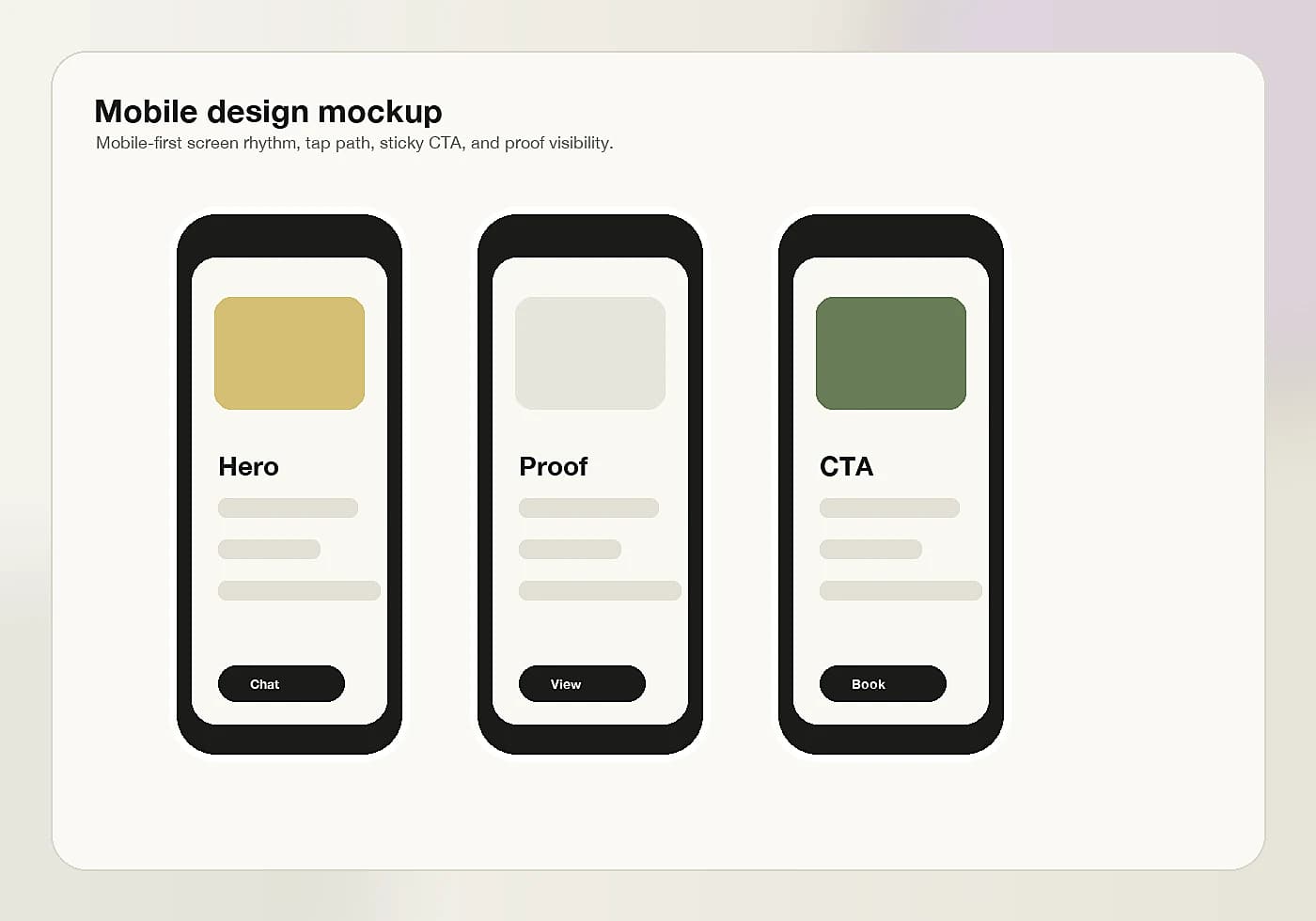
Before choosing layouts or effects, the page needs a clear content structure. Visitors should know what the business offers, who it helps, why it is credible, and what to do next.
This matters for service websites, e-commerce, portfolios, and local businesses because most users scan before they read. Clear hierarchy helps them decide whether to keep moving.
- Use headings that describe the actual offer.
- Group supporting proof near the relevant decision point.
- Avoid burying contact paths at the bottom only.
Related on this site
External reference
Performance Supports Trust
A slow page can make a business feel less reliable before the user even reads the offer. Image optimization, stable layout, clean code, and careful third-party scripts all affect perceived quality.
Performance is also connected to paid media. When ads send users to a slow or unstable page, the campaign can spend budget before the landing experience is ready to convert.
- Optimize image dimensions and loading behavior.
- Avoid unnecessary third-party scripts.
- Keep layout stable across mobile and desktop.