
The strongest Google Ads setup is not only a clean account structure. It is a clean path from search intent to action.
Start With Search Intent
Keywords are only useful when they match the decision stage.
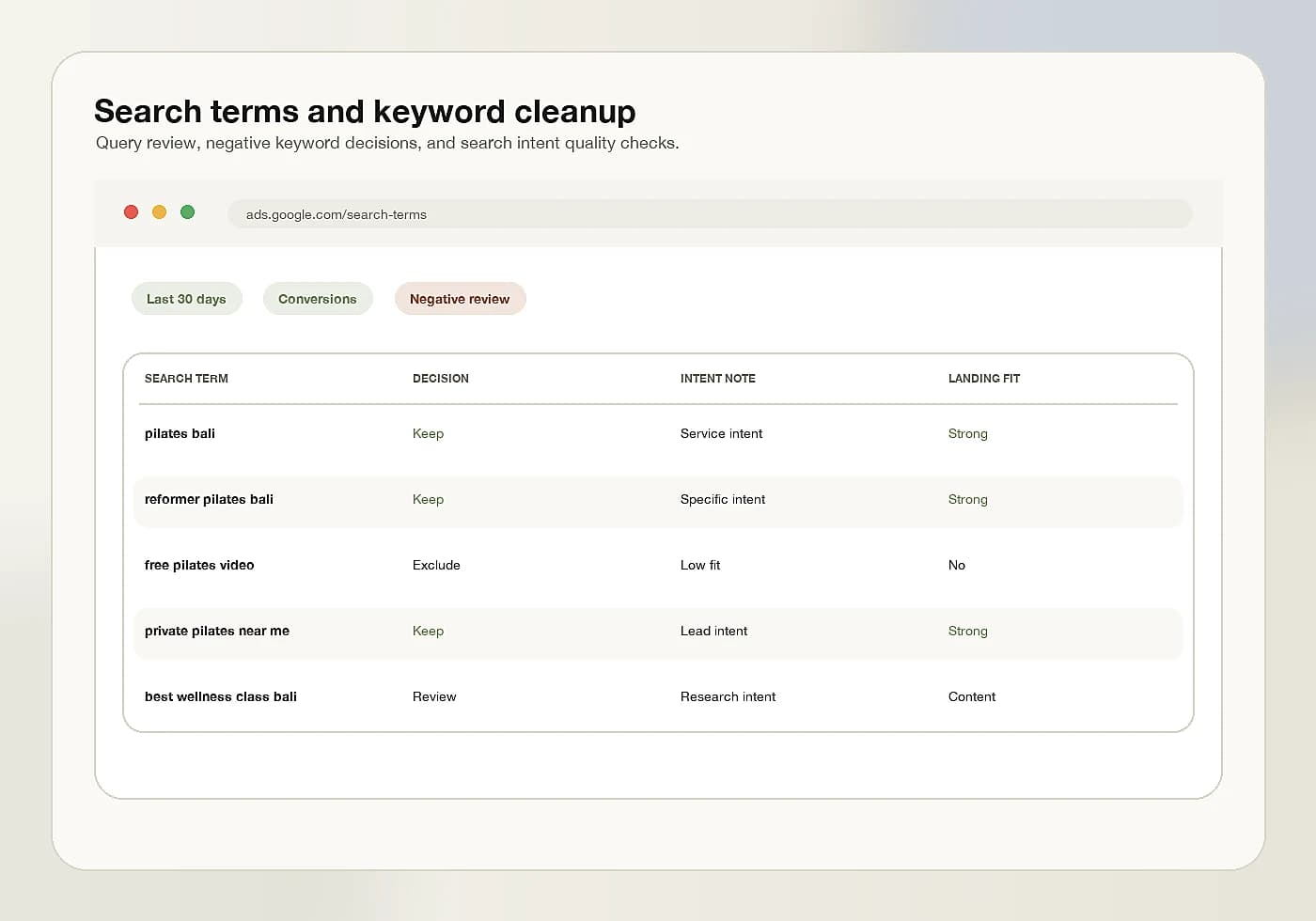
A person searching for a local service, a product, or a class is usually trying to solve a specific problem. The campaign should separate high-intent searches from broad discovery terms so budget is not spent on mixed signals.
This is why keyword planning should be connected to ad group structure, ad copy direction, location targeting, and the landing page headline. The visitor should feel that the page continues the promise of the ad.
- Separate commercial searches from research searches.
- Keep ad groups focused around one intent group.
- Match the first page message to the search phrase.
Related on this site
- Google Ads Manager service
Campaign setup, review, landing page alignment, and ongoing optimization.
External reference
The Landing Page Must Carry the Click
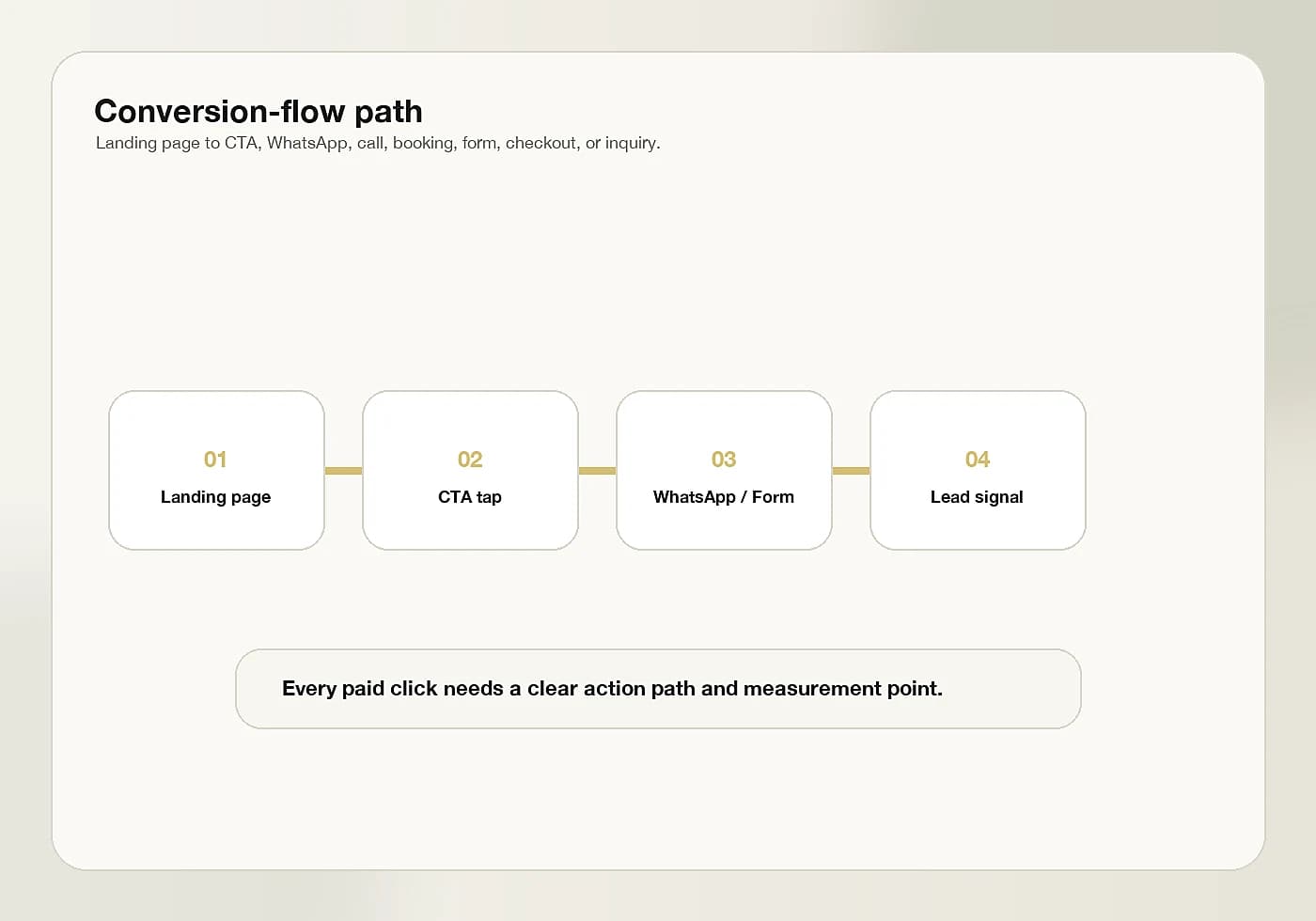
After the click, the landing page has to make the next action obvious. The visitor needs to understand the offer, trust the business, and see how to inquire, book, call, chat, or buy without effort.
A landing page review should check the above-the-fold message, mobile spacing, CTA placement, form friction, WhatsApp visibility, page speed, proof points, and whether the content answers the same intent that triggered the ad.
- Put the primary CTA close to the decision moment.
- Make mobile reading and tapping comfortable.
- Use proof, service clarity, and direct contact paths.
Related on this site
External reference
Measure the Actions That Matter
Clicks are not the business result. Useful reporting needs conversion events for the actions that show real interest, such as form submissions, WhatsApp clicks, phone calls, booking buttons, purchase starts, or completed purchases.
Tracking does not need to be overcomplicated at the start. It needs to be clear enough that campaign decisions can be made from real signals instead of guessing from traffic volume.